
Is your washing machine running without adding water, taking much longer than normal to fill, or stopping with a water-supply error? The problem may be as simple as a closed valve or kinked hose, but it can also involve the door lock, water inlet valve, water-level sensor, wiring, or electronic control.
Before replacing parts, identify exactly what the washer is doing. A machine that receives no water has different likely causes than one that fills slowly, receives only hot or cold water, or fills and immediately drains.
What should you do when a washing machine will not fill with water?
Confirm that the cycle has started, the door or lid is locked, and both water-supply valves are fully open. Inspect the inlet hoses for kinks, freezing, or damage, and check whether the washer displays a fill-related error. If the water supply is normal but the washer still does not fill, the inlet valve, door-lock system, water-level sensor, wiring, or control may require professional testing.
Stop immediately if water is leaking
Turn off the hot and cold water valves if a hose, connection, or washer component is leaking. Disconnect electrical power when it is safe to do so, but do not stand in water while touching the plug, outlet, washer, or breaker.
Arrange service if the washer continues filling after it is turned off, the breaker trips, the outlet becomes hot, or you smell burning or see smoke or damaged wiring.
What the Washer Is Doing Can Point to the Cause
No water enters at all: Check the cycle, control lock, door or lid lock, water valves, hoses, household supply, inlet valve, and fill-related error codes.
The washer fills very slowly: A partly closed valve, kinked hose, clogged inlet screen, restricted hose, low water pressure, or failing inlet valve may be limiting the flow.
Only hot or only cold water enters: One supply valve may be closed, one hose may be blocked, or one side of the dual inlet valve may have failed.
Water enters and immediately disappears: The drain hose may be installed too low, pushed too deeply into the standpipe, or sealed without an air gap, allowing the washer to siphon.
The washer hums but no water enters: The inlet valve may be receiving power but unable to open, or the water supply may be blocked.
The basket moves before water enters: This may be normal load sensing on a high-efficiency top-load washer. Allow the sensing process to finish before interrupting the cycle.
Make Sure the Washer Is Actually Supposed to Be Filling
Modern high-efficiency washers do not always add water immediately after Start is pressed. A top-load washer may lock the lid and move the basket to estimate the load size before filling. A front-load washer may briefly operate its drain pump before beginning the cycle.
High-efficiency washers also use less visible water than older top-load machines. The load may not be completely submerged, especially during an automatic or sensor-controlled cycle.
Wait through the normal sensing period described in the owner’s manual. Do not pour additional water into the tub because that can interfere with load sensing, detergent concentration, and cycle operation.
Safe Troubleshooting Steps to Try First
- Confirm that the washer has power and the selected cycle was actually started.
- Check whether Control Lock, Child Lock, Delay Start, or another special setting is active.
- Open and close the door or lid firmly without slamming it.
- Confirm that both hot and cold water valves are fully open.
- Inspect both inlet hoses for kinks, crushing, twisting, or freezing.
- Check whether other fixtures in the home have normal water pressure.
- Read the display and record any error code or flashing light pattern.
- Check the drain-hose position if water appears to enter and immediately leave.
- Run one test cycle after correcting an obvious supply or installation problem.
Do not repeatedly start and cancel cycles while the washer is attempting to lock, sense, fill, or drain. Record what happens during one complete attempt so the pattern is easier to diagnose.
1. The Cycle Has Not Started
A washer may appear ready while waiting for the Start button to be held, the door to be closed, a delayed start to expire, or a control-lock setting to be cancelled.
Check for:
- A blinking Start or Pause light
- Control Lock or Child Lock
- Delay Start
- A cycle that was paused when the lid was opened
- A detergent drawer or dispenser that is not fully closed on applicable models
- An error code that must be addressed before the cycle can continue
Follow the control-panel instructions for your model rather than pressing several buttons at random.
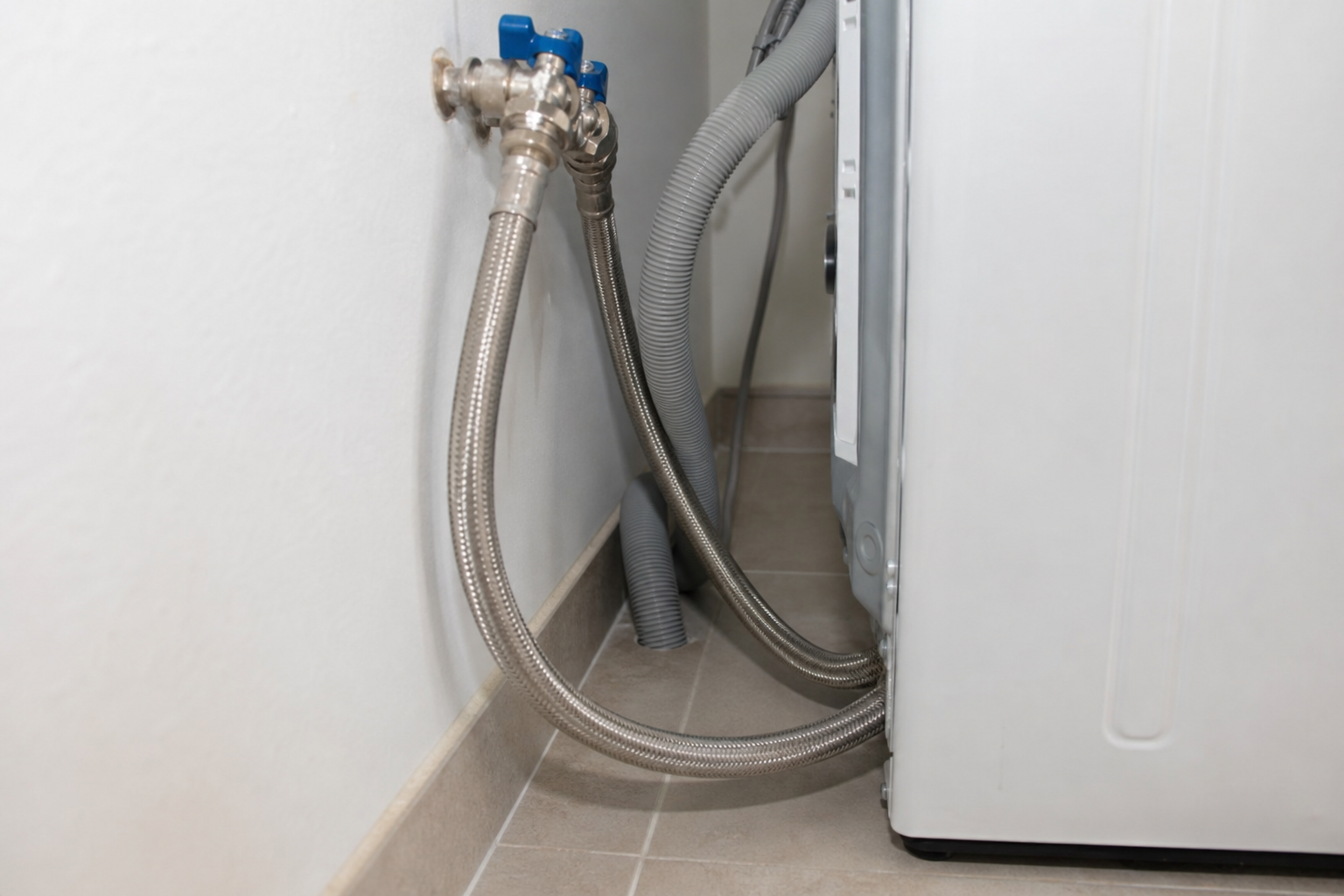
2. One or Both Water Valves Are Closed
Washing machines normally connect to separate hot and cold water valves. A valve may have been closed during plumbing work, moving, renovation, leak prevention, or appliance installation.
Many modern washers require both supplies to be connected and open even when a cold-water cycle is selected. The machine may blend temperatures or use one supply during a different part of the cycle.
What you can check
Confirm that both valves are fully open. Stop if a valve is seized, corroded, leaking, or difficult to turn. Forcing an old shutoff valve can create a plumbing leak.
3. An Inlet Hose Is Kinked, Blocked, or Frozen
A washer pushed too close to the wall can crush or sharply bend an inlet hose. The hose may also twist after the appliance is moved or installed.
Mineral deposits, plumbing debris, or damage inside the hose can restrict the water even when the outside looks normal.
In an unheated laundry space or against a poorly insulated exterior wall, a hose or supply pipe may freeze during cold GTA weather.
Do not use a heat gun, open flame, or boiling water to thaw a hose. Warm the room safely, keep the washer off, and arrange plumbing or appliance service when a frozen or damaged supply is suspected.
4. The Water Inlet Screens Are Clogged
Small screens inside the washer’s inlet connections help catch sediment and debris before it enters the water valve. Over time, those screens can become restricted.
This is especially worth checking when the washer fills slowly, only one temperature works, or the problem began after plumbing repairs or a water interruption.
How to inspect accessible inlet screens
- Unplug the washer.
- Close both water-supply valves.
- Place towels and a shallow container behind the washer.
- Disconnect the hoses only if the connections are safely accessible.
- Inspect the screens inside the washer’s inlet connections.
- Clean visible debris gently with a soft brush when the manufacturer permits it.
- Reconnect the hoses securely and check for leaking after restoring water.
Do not pull, puncture, drill, or remove an inlet screen unless the manufacturer specifically instructs you to do so. The screens may be part of the water inlet valve, and damaging them can allow debris into the appliance.
5. Household Water Pressure Is Too Low
The washing machine’s inlet valve needs adequate water pressure to open and fill within the expected time. Low pressure can cause slow filling, long-fill errors, or a cancelled cycle.
Possible reasons include:
- A partly closed household shutoff valve
- Plumbing work elsewhere in the building
- A pressure-reducing valve problem
- Restricted supply plumbing
- Several fixtures operating at the same time
- An external flood-protection hose or device restricting flow
Check whether nearby taps have normal pressure. A plumber may be needed when pressure is weak throughout the home rather than only at the washing machine.
6. The Door or Lid Is Not Locking
Many modern washers will not begin normal filling until the control confirms that the door or lid is closed and locked.
A locking problem may result from:
- Clothing trapped between the door and gasket
- A lid or door that is misaligned
- Detergent residue around the latch
- A broken strike or latch
- A failed door-lock or lid-lock assembly
- Damaged wiring or a control problem
Remove trapped clothing and wipe accessible residue after the washer is off. Do not slam the door, bend the strike, tape down a lid switch, or bypass the locking system.
7. Water Is Siphoning Out Through the Drain Hose
A washer can appear unable to fill even though water is entering normally. If the drain hose is installed incorrectly, the water may flow out as quickly as it enters.
Siphoning can occur when:
- The drain hose is too low.
- Too much hose is pushed into the standpipe.
- The hose is sealed tightly into the drain without an air gap.
- The standpipe or laundry-tub installation does not match the washer’s requirements.
Compare the drain-hose height and insertion depth with the model’s installation guide. Do not use a universal measurement because requirements differ between manufacturers and washer designs.
If the washer also leaves standing water behind, review Alpha Tech’s guide explaining why a washing machine may not drain.
8. The Water Inlet Valve Has Failed
The inlet valve contains electrically controlled passages that open when the washer requests hot or cold water. One side can fail while the other continues working.
Signs of a valve problem include:
- No water despite normal supply pressure
- Only hot or only cold water enters
- The washer hums while trying to fill
- Filling remains slow after the screens are cleaned
- Water continues entering after the washer is turned off
If water continues entering while the machine is off, close both supply valves immediately. Valve testing requires electrical measurements and inspection of the appliance’s internal water system.
9. The Water-Level Sensor Is Reporting the Wrong Level
The washer uses a pressure switch, electronic pressure sensor, or another level-sensing system to determine how much water is inside.
A blocked pressure chamber, damaged air hose, failed sensor, or wiring problem can make the control believe the tub is already full. The machine may then refuse to open the inlet valve.
Water-level systems are model-specific and are normally located behind appliance panels. Do not blow into pressure hoses, bypass switches, or apply power to a valve during homeowner troubleshooting.
10. The Wiring or Electronic Control Is Faulty
The washer control must receive information from the door lock and water-level sensor before sending power to the inlet valve.
A loose connector, broken wire, corroded terminal, failed user interface, or electronic-control problem can interrupt that sequence.
Do not replace a control board based only on a no-fill symptom. The water supply, hoses, screens, valve, lock, sensor, and connected wiring should be tested first.
Common Washer Codes Related to Filling
Error-code meanings vary by brand and model, but common examples include:
Whirlpool or Maytag F8 E1, LF, or Lo FL: The washer is not detecting the expected amount of incoming water or is taking too long to fill.
Samsung 4C or 4E: The washer detected a water-supply problem.
LG IE or 1E: The washer did not receive enough water within the expected time.
Record the complete code before resetting the machine. Similar characters can look different on a segmented display.
Should You Reset a Washer That Will Not Fill?
A power reset may clear a temporary control interruption, but it will not open a closed water valve, straighten a kinked hose, clean an inlet screen, correct siphoning, or repair a failed component.
After recording any error code and checking the water supply, you can complete one basic reset when the owner’s manual permits it:
- Cancel the current cycle.
- Turn the washer off.
- Unplug it or switch off the dedicated breaker.
- Wait approximately one to five minutes, or use the interval in the manual.
- Restore power.
- Run a short test cycle and watch whether the same symptom or code returns.
Repeated resets can clear useful diagnostic information without correcting the original problem.
What Not to Do When a Washer Will Not Fill
- Do not pour water manually into the washer.
- Do not force a seized or leaking shutoff valve.
- Do not remove inlet hoses while the water remains on.
- Do not pull the inlet screens out with a screw or pick.
- Do not tape down or bypass a door or lid switch.
- Do not apply household power directly to the inlet valve.
- Do not seal the drain hose tightly into the standpipe.
- Do not use an open flame or heat gun on a frozen hose.
- Do not repeatedly reset the washer without recording the error code.
- Do not replace the control board before the connected components are tested.
When to Call a Washing Machine Repair Technician
Checking the controls, water valves, hoses, door, household pressure, and accessible screens are reasonable first steps. Professional service is recommended when:
- The washer receives no water despite normal household supply.
- Only hot or only cold water works.
- The washer continues filling after it is turned off.
- A fill-related error returns after the recommended checks.
- The door or lid will not lock.
- Water enters and immediately siphons out despite correct hose positioning.
- The washer hums, clicks repeatedly, or stops during filling.
- The appliance or supply connection is leaking.
- The water valves or hose fittings are corroded.
- The breaker trips or electrical damage is visible.
Alpha Tech provides washing machine repair in Toronto and the GTA ,including diagnosis of inlet valves, door locks, water-level sensors, controls, hoses, and filling problems.
What a Technician Checks During the Service Visit
The technician will ask whether the washer receives no water, fills slowly, receives only one temperature, or fills and drains at the same time. Mention any recent plumbing work, installation changes, freezing conditions, leaking, or error codes.
Depending on the symptoms, testing may include:
- Hot and cold water flow and pressure
- Supply valves, hoses, and inlet screens
- Water inlet valve operation
- Door lock, lid lock, latch, and strike
- Drain-hose position and possible siphoning
- Pressure switch, pressure hose, or electronic water-level sensor
- Wiring, connectors, and control signals
- Stored error codes and diagnostic mode
- User-interface and main-control operation
Testing the complete filling sequence helps avoid replacing the inlet valve when the actual cause is a closed supply, clogged screen, door lock, siphoning problem, sensor, or damaged wire.
How to Prevent Future Washer Fill Problems
- Keep enough space behind the washer to prevent hose kinks.
- Inspect hoses regularly for bulges, cracks, corrosion, and leaking.
- Avoid pushing the appliance against the water connections.
- Keep the laundry area warm enough to prevent frozen plumbing.
- Do not overload the washer door or force the latch.
- Use the drain-hose form and installation height specified in the manual.
- Check the inlet screens after sediment-producing plumbing work.
- Use detergent made for the washer type and avoid excessive suds.
- Address slow filling before the washer begins cancelling cycles or displaying errors.
Check the Instructions for Your Washer Model
Fill sequences, sensing times, hose requirements, screen-cleaning instructions, drain heights, and reset procedures vary between top-load and front-load washers. Use the complete model number when checking the manual.
Whirlpool Washer Not Filling or Filling Slowly Guidance
Frequently Asked Questions
Why is my washing machine running but not filling with water?
The washer may be sensing the load, attempting to lock the door, or operating its drain pump before filling. If no water enters after the normal startup period, check the supply valves, hoses, inlet screens, door lock, and displayed error code.
Why does my washing machine fill so slowly?
Slow filling commonly results from a partly closed water valve, kinked hose, clogged inlet screen, low household pressure, restricted hose, or failing water inlet valve.
Does a washer need both hot and cold water connected?
Many modern washers require both supplies to be connected and open, even for cold cycles. The appliance may blend temperatures or use a different supply during rinsing. Check the installation manual for your model.
Why does water enter my washer and immediately drain out?
The washer may be siphoning because the drain hose is too low, pushed too deeply into the standpipe, or sealed without an air gap. Compare the installation with the model manual.
Can clogged inlet screens stop a washer from filling?
Yes. Sediment and mineral debris can restrict the small screens inside the washer’s inlet connections. Turn off the water and power before inspection, and do not remove the screens unless the manufacturer instructs you to do so.
Can a faulty door lock stop a washing machine from filling?
Yes. Many washers will not begin normal filling until the control confirms that the door or lid is securely locked. A damaged latch, lock assembly, sensor, or wire can interrupt the cycle.
Should I reset a washer that will not fill?
Record any error code and check the water supply first. One model-approved reset may clear a temporary electronic interruption, but it will not correct a closed valve, blocked hose, clogged screen, siphoning problem, or failed component.
When should I call a washing machine technician?
Book service when the washer receives no water despite normal supply, fills through only one temperature, continues filling while off, leaks, cannot lock, or repeatedly displays a fill-related error.
Is Your Washing Machine Still Not Filling?
If the supply valves are open and the hoses are clear, the washer may need inlet-valve, door-lock, water-level sensor, wiring, or control diagnosis.
Alpha Tech Appliance provides washing machine repair for homeowners across Toronto and the GTA.