
Is your freezer still cold while the refrigerator section feels warm? This is a common cooling problem because many refrigerator-freezer combinations produce cold air in the freezer and then circulate part of that air into the fresh-food compartment.
When the freezer works but the fridge does not, the problem is often related to blocked airflow, an evaporator fan, a stuck air damper, heavy frost, or a failed defrost component. Less commonly, the temperature sensor or electronic control may not be managing the cooling system correctly.
Why is the freezer cold but the refrigerator warm?
The freezer can remain cold while the fridge warms up when cold air is not reaching the refrigerator compartment. The most common causes are blocked interior vents, an evaporator fan that is not running, frost covering the evaporator coils, a closed or failed damper, incorrect temperature settings, or a faulty temperature sensor.
Protect refrigerated food first
Check the refrigerator temperature with an appliance thermometer. The fresh-food section should remain at 4°C or colder. Move meat, dairy products, leftovers, and other perishable food to a working refrigerator or an insulated cooler with ice if the temperature is rising.
Review Health Canada’s safe food storage guidance if you are unsure whether food is still safe.
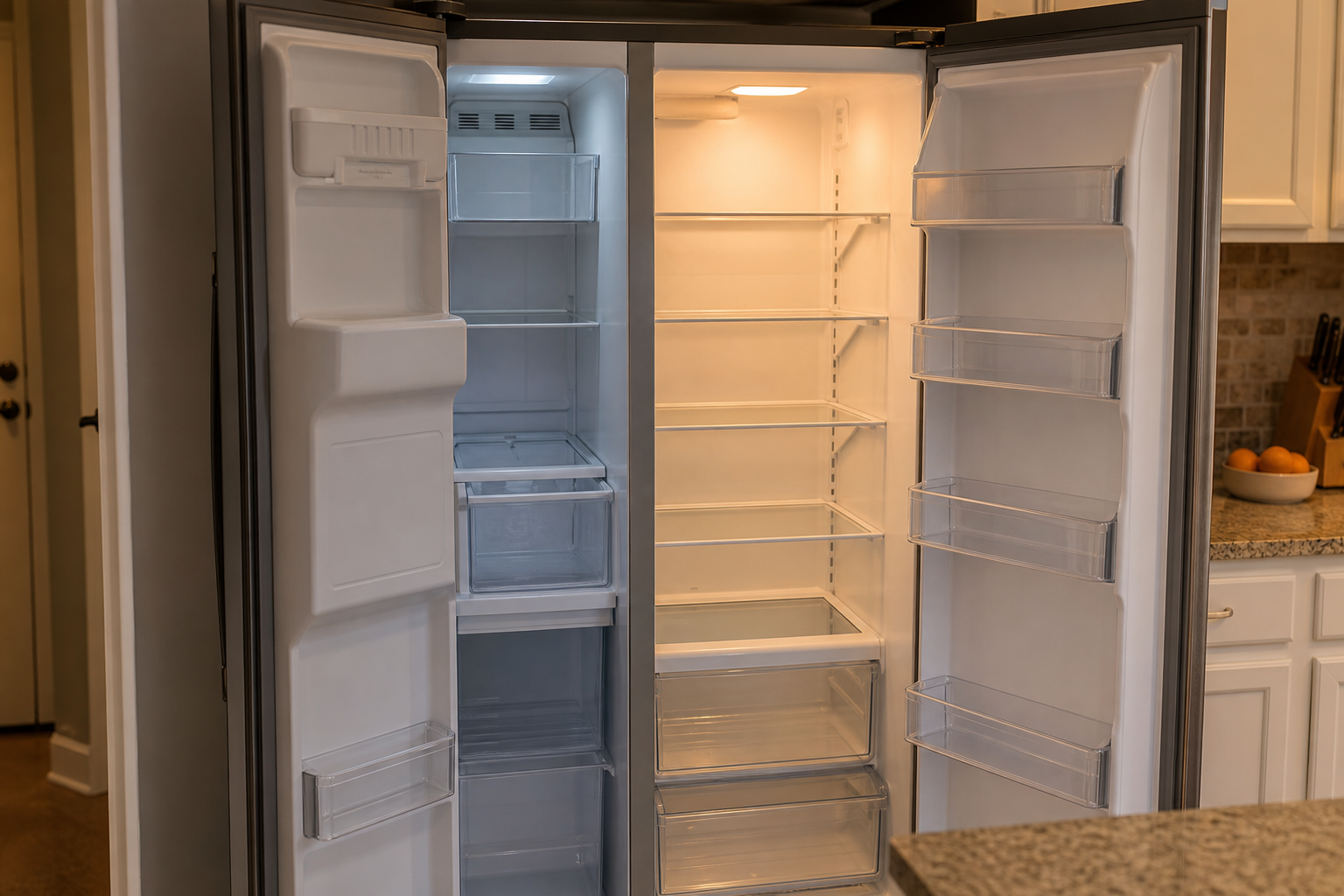
How the Freezer and Refrigerator Compartments Work Together
In many conventional refrigerators, the evaporator coils are located behind a panel in the freezer. These coils become cold, and an evaporator fan moves air across them.
Some of that cold air remains in the freezer, while the rest travels through vents or ducts into the refrigerator compartment. A damper helps control how much cold air enters the fridge.
This explains why the freezer can appear normal even when the refrigerator is warm. The cooling system may still be producing cold air, but that air is not being moved or directed where it is needed.
What to Check Before Booking Refrigerator Repair
- Check the actual fridge temperature with an appliance thermometer.
- Confirm that the refrigerator temperature setting was not changed accidentally.
- Move food containers away from vents along the rear or upper interior walls.
- Look for heavy frost or snow on the freezer’s inside rear panel.
- Listen for the evaporator fan when the compressor is running.
- Inspect the refrigerator door seal for gaps, damage, or food residue.
- Make sure the refrigerator has the ventilation clearance required by the manufacturer.
- Clean accessible condenser coils if the owner’s manual recommends it.
Test one change at a time. If the refrigerator cools briefly and then becomes warm again, write down how long the improvement lasted. That detail can help identify an intermittent fan, damper, sensor, or defrost problem.
1. Food Is Blocking the Refrigerator Air Vents
Cold air usually enters the refrigerator through vents near the back or top of the compartment. If food packages are placed directly against those openings, air cannot circulate through the shelves.
This can create a noticeable temperature difference. Food near the vent may feel cold while items near the door or lower shelves become too warm.
What you can try
Leave several centimetres of space around the interior vents. Avoid pressing containers against the rear wall, and do not pack shelves so tightly that air cannot move between them.
2. The Evaporator Fan Is Not Moving Cold Air
The evaporator fan circulates cold air through the freezer and into the refrigerator. If the fan motor fails, the freezer may remain cold near the evaporator coils while the fridge receives little or no airflow.
A fan problem may also cause scraping, squealing, clicking, or intermittent airflow. On many refrigerators, the evaporator fan stops when the freezer door opens, so you may not hear it with the door open.
Signs that point to the fan
- The freezer is cold but there is little air coming from the fridge vent.
- Cooling changes when the refrigerator is bumped or the door is opened.
- You hear scraping from behind the freezer panel.
- The fan starts and stops unpredictably.
3. Frost Is Blocking the Evaporator Coils or Air Ducts
A thin layer of frost on an evaporator is normal, but a thick layer of ice can prevent air from passing through the coils. It can also block the ducts that carry cold air into the refrigerator.
Heavy frost on the freezer’s rear interior wall often suggests a defrost-system problem. Possible causes include a failed defrost heater, defrost sensor, thermostat, timer, wiring connection, or electronic control.
Read more about the common causes of frost inside a freezer.
4. The Air Damper Is Stuck Closed
The damper is a small door that controls the amount of freezer air entering the refrigerator compartment. Depending on the model, it may be moved mechanically or by a small motor.
If the damper is stuck closed, blocked by ice, or not receiving the correct control signal, the freezer can continue cooling while the refrigerator gradually becomes warm.
A damper should not be forced open. Plastic housings, gears, and motors can break easily. Professional testing may be needed to determine whether the damper itself failed or whether a sensor or control is keeping it closed.
5. The Refrigerator Temperature Setting Is Incorrect
The temperature may have been changed during cleaning, food loading, a power interruption, or accidental contact with the control panel. Some models also include cooling-off, showroom, vacation, or energy-saving modes.
Set the refrigerator to the manufacturer’s recommended position and allow enough time for the temperature to stabilize. Avoid repeatedly moving the control to its coldest setting because that can create additional frost without correcting an airflow problem.
Use a thermometer to verify the result rather than relying only on how the air feels when the door opens.
6. A Temperature Sensor Is Reading Incorrectly
Refrigerators use thermistors or temperature sensors to tell the electronic control how cold each compartment is. A sensor that sends an incorrect reading may cause the control to reduce airflow or cooling before the fridge reaches a safe temperature.
A sensor problem usually requires resistance or voltage testing. The sensor, wiring, connector, or control board may be responsible, so replacing a sensor based only on the symptom can lead to an unnecessary part replacement.
7. The Refrigerator Door Is Not Sealing Properly
A damaged, dirty, or misaligned refrigerator gasket allows warm room air to enter the compartment. The freezer may still appear cold because its door seal is intact and it receives cooling first.
Look for food containers, shelves, or drawers preventing the door from closing. Wipe the gasket with mild soap and water, then check for tears, hardened sections, or visible gaps.
Review our guide explaining why a refrigerator or freezer door will not seal.
8. Dirty Condenser Coils or Poor Exterior Ventilation
Dirty condenser coils normally affect both compartments, so they are less likely to be the only cause when the freezer is fully cold. However, restricted heat release can make an existing airflow or defrost problem worse.
Check the owner’s manual to determine whether the coils are accessible and require cleaning. Some modern refrigerators use enclosed condenser systems that homeowners should not open.
Keep the front grille, rear ventilation space, and manufacturer-required clearances free from boxes, dust, and stored items.
Less Common Causes of a Warm Fridge and Cold Freezer
If airflow, frost, settings, and door seals appear normal, the refrigerator may have a less obvious electrical or refrigeration problem.
- Loose or damaged wiring to the evaporator fan or damper
- A faulty electronic control board
- An intermittent door switch
- A partially restricted air duct
- A refrigerant or sealed-system problem
- A compressor that cannot maintain sufficient cooling under normal use
What Different Symptoms May Indicate
No air coming from the fridge vent: Check for a blocked vent, failed evaporator fan, frost obstruction, or closed damper.
Heavy frost on the freezer’s back wall: A defrost heater, sensor, thermostat, control, or drain problem may be allowing ice to build up.
Scraping or rattling from the freezer: Ice may be touching the evaporator fan, or the fan motor may be wearing out.
Fridge cools after being unplugged but warms again: A recurring frost, fan, damper, sensor, or electronic-control problem is likely.
Both compartments are gradually getting warmer: Check condenser airflow, compressor operation, power supply, and the sealed refrigeration system.
What Not to Do
- Do not chip ice away with a knife, screwdriver, or sharp tool.
- Do not use a heat gun or open flame to defrost the freezer.
- Do not force an air damper, door, drawer, or frozen panel.
- Do not open sealed refrigeration tubing.
- Do not touch internal wiring while the refrigerator is connected to power.
- Do not replace a control board solely because the refrigerator is warm.
When to Call a Refrigerator Repair Technician
Book professional service when basic airflow and temperature checks do not restore cooling or when the refrigerator shows signs of an internal failure.
- The fridge remains above 4°C.
- There is heavy frost behind the freezer panel.
- The evaporator fan is silent, noisy, or intermittent.
- The damper does not open or close correctly.
- The refrigerator cools temporarily and then warms again.
- An error code keeps returning.
- The compressor runs continuously or repeatedly clicks.
- You smell burning, see sparks, or find water near electrical components.
Alpha Tech provides refrigerator repair in Toronto and the GTA. A technician can test the fan, damper, defrost components, sensors, wiring, controls, and cooling system before recommending a part.
What a Technician Checks During the Service Visit
The technician will normally begin by confirming the temperatures in both compartments and asking when the problem started. It helps to mention recent power outages, unusual noises, frost, water leaks, error codes, or changes made before the issue appeared.
Testing may include checking airflow, evaporator-fan operation, the damper position, frost buildup, defrost components, thermistors, door switches, condenser airflow, and electronic controls.
A proper diagnosis should identify whether the visible symptom is the actual failure or the result of another problem. For example, a closed damper may be caused by a failed motor, ice obstruction, sensor reading, wiring issue, or control signal.
How to Reduce Future Refrigerator Cooling Problems
- Keep food away from the interior air vents.
- Do not pack shelves so tightly that air cannot circulate.
- Clean spills from door seals and closing surfaces.
- Check temperatures with an appliance thermometer.
- Use the temperature settings recommended for your model.
- Clean accessible condenser coils when instructed by the manufacturer.
- Leave the required ventilation clearance around the refrigerator.
- Investigate new fan noises, recurring frost, and temperature changes early.
You can also review our tips for making a refrigerator more efficient and protecting a fridge from overworking.
Frequently Asked Questions
Why is my freezer freezing but my refrigerator is warm?
The cooling system may still be producing cold air, but that air is not reaching the refrigerator compartment. Common causes include blocked vents, a failed evaporator fan, frost-covered coils, a stuck damper, or an incorrect temperature reading.
Can blocked refrigerator vents cause the fridge to become warm?
Yes. Food packages placed against the vents can stop cold air from circulating through the refrigerator. Move items away from the vents and leave space between containers so air can reach each shelf.
How do I know if the evaporator fan is not working?
You may notice little airflow from the fridge vent, silence when the compressor is running, or scraping and squealing from the freezer. Some refrigerator fans stop when the door opens, so model-specific testing may be required.
Can I defrost the refrigerator to fix the problem?
A complete defrost may temporarily restore airflow if ice is blocking the coils or ducts, but the frost will usually return when a defrost component has failed. Never chip ice with a sharp tool or use an open flame.
Is food safe when the refrigerator is warm but the freezer works?
The freezer temperature does not protect food stored in the refrigerator compartment. Check the fridge with a thermometer and move perishable items if the temperature rises above 4°C.
When should I call a technician for a warm refrigerator?
Book service when the refrigerator remains above 4°C, there is heavy frost, the evaporator fan is not operating, the damper is stuck, or the problem returns after basic airflow and temperature checks.
Is Your Freezer Cold but the Fridge Still Warm?
If clearing the vents and checking the settings does not restore safe refrigerator temperatures, the appliance may need fan, damper, defrost, sensor, or control testing.
Alpha Tech Appliance provides refrigerator repair for homeowners across Toronto and the GTA.