
Is your dishwasher door refusing to close, failing to click into place, or popping open as soon as you let go? The problem may be as simple as a utensil blocking the door, but it can also involve the racks, latch, door strike, gasket, hinges, or the dishwasher’s position inside the cabinet.
Start with the visible checks before assuming the latch needs replacement. The way the door behaves can help narrow down whether something is physically blocking it, the latch is not engaging, or the dishwasher is not recognizing that the door is closed.
Why won’t your dishwasher door close?
A dishwasher door usually will not close because a dish or utensil is sticking out, a rack is not pushed in correctly, debris is blocking the latch, the door strike is misaligned, the gasket has shifted, or the dishwasher is no longer level in the cabinet. Worn hinges, springs, cables, or a damaged latch assembly can also prevent the door from closing securely.
What Is the Dishwasher Door Actually Doing?
Before inspecting individual parts, pay attention to the exact symptom. Different door behaviours point to different causes.
The door stops before reaching the frame: A rack, dish, utensil, gasket, cabinet edge, or damaged hinge may be physically blocking it.
The door reaches the frame but will not click: The latch, strike, alignment, or gasket is the more likely problem.
The door closes but pops open: The latch may not be holding, the strike may be misaligned, or an automatic door-opening feature may still be extended.
The door clicks shut but the dishwasher will not start: The door switch, latch sensor, control lock, cycle setting, or electronic control may not be recognizing the closed-door condition.
Do not force the dishwasher door
Forcing the door can bend the strike, break the latch, damage the hinges, crack the inner door panel, or distort the dishwasher tub. Do not run the dishwasher unless the door closes and latches normally. Disconnect power before touching the latch, hinges, mounting hardware, springs, cables, or internal parts.
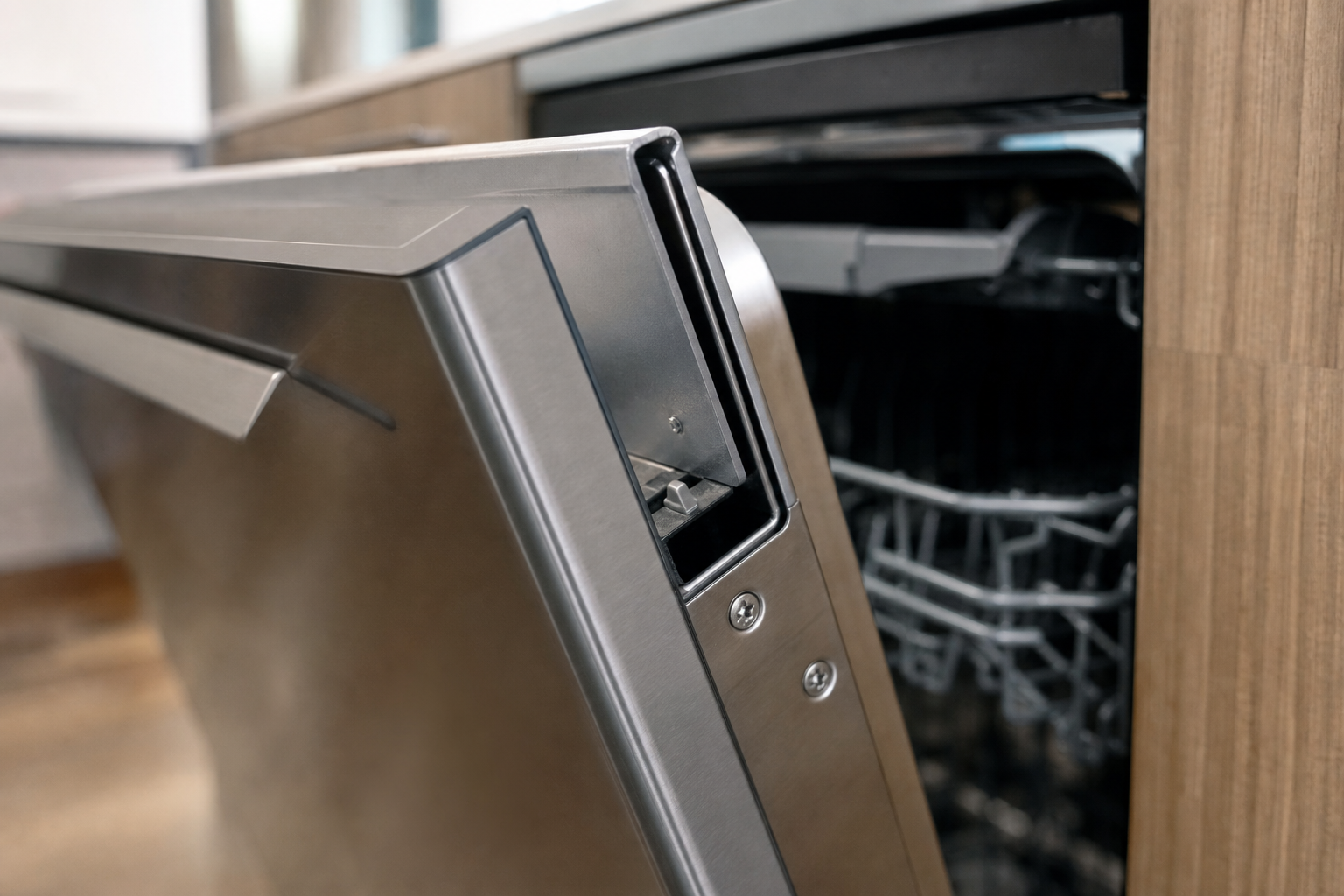
What to Check When a Dishwasher Door Will Not Close
- Remove large dishes, pan handles, utensils, and cutting boards that extend beyond the racks.
- Push both racks completely into the dishwasher.
- Check whether a rack wheel has come off its rail or a rack is sitting crooked.
- Make sure the lower rack is installed in the correct direction for your model.
- Wipe food residue and detergent buildup from the door gasket, latch, and strike.
- Look for a twisted, loose, swollen, or damaged door seal.
- Check whether the door rubs against the countertop, cabinet, or mounting hardware.
- Observe whether the door sits evenly when it is almost closed.
- Check the manual for an automatic door-opening or drying feature that may temporarily hold the door open.
Remove one possible obstruction at a time and close the door gently after each check. This makes it easier to identify what was preventing the door from closing.
1. A Dish or Utensil Is Blocking the Door
A pan handle, serving spoon, knife, cutting board, or tall plate can extend beyond the edge of a rack and stop the door before it reaches the latch.
The obstruction is not always obvious from the front. Long utensils can slip through the rack and press against the inner door, spray arm, or detergent dispenser.
What you can try
Remove oversized items and reposition utensils so nothing extends beyond the rack. Make sure tall dishes do not prevent the upper rack or spray arm from moving into its normal position.
2. A Dishwasher Rack Is Misaligned
A rack that is off its rail, installed backward, or not pushed in completely can hold the door open. Damaged rack wheels, bent rails, or a loose rack stop can also leave the rack sitting too far forward.
Pull each rack out and slide it back slowly. It should move evenly and sit fully inside the tub without needing to be lifted, twisted, or forced.
Signs of a rack problem
- The door closes when the rack is removed.
- One side of the rack sits farther forward.
- A wheel has come off its track.
- The rack stops before reaching the rear of the tub.
3. The Dishwasher Latch or Door Strike Is Misaligned
The latch in the door must line up with the strike on the dishwasher frame. If either part is loose, bent, worn, or shifted, the door may reach the closed position without clicking securely.
Grease, detergent residue, or food debris can also prevent the latch from moving freely. Clean only the accessible surface with a damp cloth after disconnecting power.
Do not bend the strike or insert tools into the latch unless the model’s service instructions specifically require it. An incorrect adjustment can create a leak or prevent the door switch from registering.
4. The Door Latch Is Worn or Broken
A dishwasher latch holds the door closed and often activates the safety switch that allows a wash cycle to begin. Repeated use can wear the latch, spring, locking arm, or internal switch.
The latch may be damaged if it feels unusually loose, remains stuck in the closed position while the door is open, or no longer produces the normal click.
If the door only stays closed when you hold or push it, stop using the dishwasher. Extra pressure may temporarily activate the switch, but it does not create a dependable seal.
5. The Door Gasket Is Dirty, Twisted, or Damaged
The gasket forms a watertight seal around the dishwasher opening. Food debris, hardened detergent, or a section of gasket that has pulled out of its channel can interfere with the door.
Inspect the seal for folds, swelling, hardened areas, tears, and sections that sit farther forward than the rest. Wipe the gasket and surrounding tub surface with warm water and a soft cloth.
Do not cut, stretch, glue, or force the gasket into place. A damaged seal may need replacement, especially if the dishwasher also leaks from the front.
6. The Dishwasher Is Not Level or Square in the Cabinet
A built-in dishwasher must sit level and square in its cabinet opening. If it has shifted, tilted, or lost support from a levelling leg, the door may no longer line up with the latch.
Look at the spacing around the closed door. Uneven gaps, rubbing against one side of the cabinet, or a door that appears twisted can indicate an installation or levelling issue.
This is especially likely after flooring work, cabinet changes, moving the dishwasher, or a recent installation. Alpha Tech also provides dishwasher installation in Toronto and the GTA when the appliance needs to be repositioned or correctly secured.
7. A Hinge, Spring, Cable, or Pulley Is Damaged
Dishwasher hinges guide the door while springs, cables, or pulleys help control its weight. If one side is bent, disconnected, or worn, the door may sit crooked and miss the latch.
A hinge or spring problem may cause the door to drop suddenly, rise on its own, feel heavier than normal, scrape the cabinet, or sit lower on one side.
These parts are often located beside or underneath the dishwasher and can be under tension. Disconnect power and leave spring, cable, hinge, and pulley repairs to a qualified technician.
8. An Automatic Door-Opening Feature Is Still Extended
Some newer dishwashers automatically open the door slightly at the end of a cycle to improve drying. The mechanism may remain extended for a short period and prevent the door from closing immediately.
Do not force the door against an extended opening arm. Wait for the mechanism to retract and follow the reset instructions in the owner’s manual.
If the opening mechanism remains extended after the recommended waiting period or power reset, the dishwasher may need service.
9. The Door Closes but the Dishwasher Does Not Recognize It
Sometimes the door closes and appears to latch, but the cycle will not begin. This can happen when the latch switch, door sensor, wiring, or control does not recognize the closed-door position.
Before assuming there is an electrical failure, confirm that Control Lock, Delay Start, or another cycle option is not active. Cancel the current selection and follow the model-specific reset procedure.
If the dishwasher starts only when pressure is applied to the door, the latch, strike, switch, or door alignment should be professionally inspected.
What Different Dishwasher Door Symptoms May Mean
The door closes when the racks are empty: A dish, utensil, rack wheel, rail, or loading arrangement is causing the obstruction.
The door rubs on one side: The dishwasher may be out of level, shifted in the opening, or affected by a bent hinge.
The door needs excessive pressure to click: The latch, strike, gasket, or alignment may be worn or out of position.
The door drops heavily: A spring, cable, pulley, or hinge component may be broken.
The dishwasher leaks after the door is forced shut: Stop the cycle because the door seal or alignment is not dependable.
What Not to Do When the Dishwasher Door Will Not Close
- Do not slam or force the door.
- Do not hold the door closed while running a cycle.
- Do not bend the latch strike without model-specific instructions.
- Do not cut, glue, or stretch the door gasket.
- Do not reach beneath the dishwasher while it is connected to power.
- Do not remove tensioned springs or cables without proper training.
- Do not assume the latch is faulty before checking the racks and installation alignment.
When to Call a Dishwasher Repair Technician
Basic rack, loading, and cleaning checks are usually safe. Professional diagnosis is recommended when the door still will not close after visible obstructions have been removed.
- The latch is loose, broken, or stuck.
- The door is crooked or rubs the cabinet.
- A hinge, spring, cable, or pulley is damaged.
- The dishwasher has shifted inside the cabinet opening.
- The gasket is torn, swollen, or repeatedly moves out of place.
- The door closes but the dishwasher does not detect it.
- The appliance starts only when you push against the door.
- Water leaks from the front during a cycle.
Alpha Tech provides dishwasher repair in Toronto and the GTA. A technician can determine whether the problem comes from loading, alignment, installation, the gasket, latch, hinges, or the door switch.
What a Technician Checks During the Service Visit
The technician will first confirm whether the door is physically obstructed, mechanically misaligned, or closing without activating the door switch.
The inspection may include:
- Rack position, wheels, rails, and stops
- Door latch and strike alignment
- Gasket condition and sealing surface
- Hinges, springs, cables, and pulleys
- Dishwasher levelling and mounting
- Cabinet or countertop interference
- Door switch, wiring, and control recognition
- Automatic drying-door mechanisms on applicable models
This process helps separate a simple adjustment from a failed mechanical or electrical part before anything is replaced.
How to Prevent Dishwasher Door Problems
- Keep pan handles and long utensils inside the rack boundaries.
- Push racks in completely before closing the door.
- Clean food residue from the gasket, latch, and strike.
- Do not sit, stand, or place heavy objects on the open door.
- Address damaged rack wheels before the rack becomes misaligned.
- Check door rubbing or uneven gaps before they become worse.
- Have the dishwasher levelled and secured correctly after flooring or cabinet work.
Check the Instructions for Your Dishwasher Model
Door parts and reset procedures vary by manufacturer and model. Use your model number when checking the owner’s manual or official product support.
Frequently Asked Questions
Why won’t my dishwasher door click shut?
The door may be blocked by a dish or rack, or the latch and strike may not be lining up. A dirty gasket, shifted dishwasher, or worn latch can also prevent the normal closing click.
Can a dishwasher rack stop the door from closing?
Yes. A rack that is off its rail, installed backward, not pushed in fully, or affected by a damaged wheel can sit too far forward and block the door.
Can a dishwasher gasket prevent the door from closing?
Yes. Food buildup, a twisted section, swelling, or damage can cause the gasket to interfere with the door. Clean the accessible seal and inspect it for sections that are loose or out of position.
Why does my dishwasher start only when I push the door?
The latch, strike, door switch, or appliance alignment may be preventing the dishwasher from consistently recognizing that the door is closed. Stop using it until the door can latch without added pressure.
Should I force a dishwasher door that will not close?
No. Forcing the door can damage the latch, strike, hinges, gasket, inner panel, or dishwasher tub. Remove visible obstructions and arrange repair if the door still does not close normally.
When should I book dishwasher door repair?
Book repair when the latch is broken, the door is crooked, a hinge or spring is damaged, the gasket is torn, the dishwasher has shifted, or the door still will not close after the racks and loading have been checked.
Still Can’t Close Your Dishwasher Door?
If the racks are seated correctly and nothing is blocking the door, the problem may involve the latch, strike, gasket, hinges, springs, installation alignment, or door switch.
Alpha Tech Appliance provides dishwasher repair for homeowners across Toronto and the GTA.