
Are your clothes still damp when the dryer cycle ends? The cause is often restricted airflow, an unsuitable cycle, an overloaded drum, or laundry entering the dryer with too much water still in it. If the dryer is not producing enough heat or stops too soon, a sensor, power, gas, or internal component may also be involved.
The temperature of the clothes and the length of the cycle provide useful clues. Clothes that are hot but damp usually point toward an airflow problem, while clothes that remain cold may indicate that the dryer is not heating.
Why are clothes still damp after using a dryer?
Clothes usually remain damp because the lint screen or exhaust vent is restricting airflow, the drum is overloaded, the wrong cycle was selected, the moisture sensors ended the cycle too early, or the washer did not remove enough water first. If the dryer tumbles but produces little or no heat, the heating system, power supply, gas supply, thermostat, sensor, or electronic control may need professional testing.
What the Dryer’s Behaviour Can Tell You
Clothes are hot but still damp: The dryer is producing heat, but humid air may not be escaping because of a clogged lint screen, restricted vent hose, blocked exterior hood, or overly large load.
Clothes are cold and damp: The selected cycle may not use heat, or the dryer may have a heating, power, gas-supply, thermostat, or control problem.
The cycle ends after only a few minutes: Dirty moisture sensors, an extremely small load, mixed fabrics, or poor contact between the laundry and sensor bars may be causing an automatic cycle to stop early.
The dryer runs for a long time: Restricted ventilation, weak heat, an oversized load, unsuitable settings, or laundry coming from the washer too wet are the most likely causes.
Stop using the dryer if it is overheating
Turn the dryer off if you smell burning or gas, see smoke or sparks, hear severe grinding, notice scorching, or find that the cabinet and laundry are becoming unusually hot. A blocked exhaust system can trap heat and lint, so repeated long cycles should not be ignored.
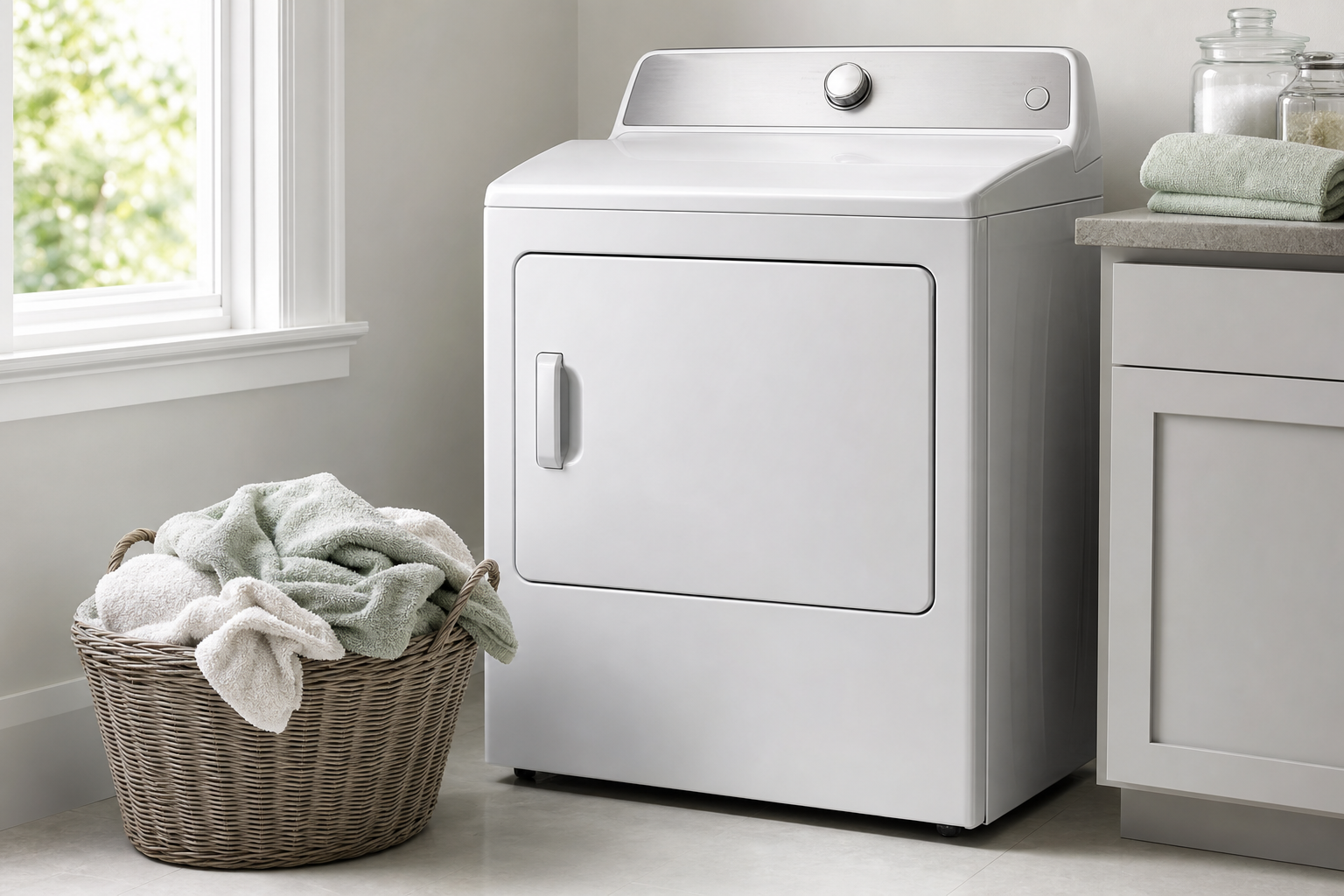
What to Check Before Booking Dryer Repair
- Clean the lint screen completely.
- Reduce the load and separate heavy items from lightweight clothing.
- Confirm that the selected cycle is designed to fully dry the fabric.
- Check whether the drum becomes warm during a timed drying cycle.
- Inspect the accessible exhaust hose for crushing, kinks, or sharp bends.
- Check whether the outdoor vent flap opens while the dryer is operating.
- Clean accessible moisture sensor bars according to the owner’s manual.
- Notice whether laundry is already unusually wet when it leaves the washing machine.
Test one change at a time. Record whether the cycle became shorter, whether the laundry felt hotter, and whether all items dried evenly.
1. The Lint Screen Is Clogged
The lint screen is the first part of the dryer’s airflow path. When lint covers the screen, less humid air can leave the drum, which increases drying time and may leave clothing damp.
Remove lint after every load. If the screen appears clean but water pools on its surface instead of passing through, residue from fabric softener or dryer sheets may be restricting the mesh.
What you can try
Remove the screen and clean it according to the manufacturer’s instructions. Allow it to dry completely before reinstalling it. Do not operate the dryer without the lint screen in place.
Review Alpha Tech’s dryer lint cleaning tips for additional maintenance guidance.
2. The Dryer Vent Is Blocked or Restricted
A dryer removes moisture by pushing warm, humid air through the exhaust vent to the outside. If that path is blocked, the dryer may continue heating while moisture remains trapped in the drum.
Signs of restricted dryer ventilation include:
- Clothes feel hot but remain damp.
- Ordinary loads require two or more cycles.
- The laundry room becomes unusually warm or humid.
- A Check Vent or airflow warning appears.
- The dryer cabinet becomes hotter than usual.
- The exterior vent has weak or no airflow.
The restriction may be inside the wall vent, at the exterior hood, or in the connection behind the dryer. Whole-home vent cleaning may require a professional, particularly when the duct is long, hidden, or travels through several floors.
3. The Exhaust Hose Is Crushed or Kinked
A dryer pushed too close to the wall can flatten or sharply bend the exhaust hose. Even a partial restriction can reduce airflow enough to extend drying time.
Disconnect power before looking behind the appliance. Do not pull a gas dryer away from the wall if doing so could strain or damage the gas connection.
What to look for
The vent connection should remain open through its full diameter without crushing, flattening, loose joints, or unnecessary sharp turns. Vent material and maximum length should match the appliance manual and local requirements.
4. The Outdoor Dryer Vent Is Blocked
The exterior exhaust flap should open while the dryer is operating. Lint, debris, nesting material, paint, damage, or a stuck cover can prevent humid air from leaving.
During Toronto winters, snow and ice can also obstruct a low exterior vent. Check the outlet from outside only when it is safely accessible.
Do not operate the dryer if the vent exhausts into the home, garage, attic, crawlspace, or another enclosed area. The exhaust should terminate outdoors as required for the installation.
5. The Dryer Is Overloaded
Clothing needs room to tumble so warm air can reach each item. A tightly packed drum traps damp fabric together and reduces airflow through the load.
Bulky items such as comforters, towels, blankets, and mattress covers can also fold into a damp bundle. The outside may feel dry while moisture remains trapped in the centre.
What you can try
Remove part of the load and dry the remaining items again. Pause and reposition bulky bedding if the care label and appliance instructions permit it.
6. The Load Is Too Small or Contains Mixed Fabrics
Automatic cycles depend on laundry making contact with moisture sensor bars. A very small load may tumble without touching the sensors consistently, causing the dryer to end the cycle early.
Mixed loads create a similar problem. Lightweight shirts may dry first and tell the sensor that the load is ready, while towels, waistbands, pockets, and heavy seams remain damp.
Dry similar materials together. For very small or uneven loads, a suitable timed cycle may produce more predictable results than an automatic sensor cycle.
7. The Wrong Dryer Cycle or Setting Was Selected
Air Fluff, No Heat, Delicate, Eco, Steam, Quick Dry, and Wrinkle Release settings are not designed to dry every type of load in the same way.
Eco settings may use lower heat or delay heat to reduce energy consumption. Steam cycles intentionally add moisture, and quick cycles are generally intended for smaller loads.
Check the garment labels and dryer manual, then select the recommended fabric cycle and dryness level. Avoid repeatedly using the highest heat when a longer suitable cycle would be safer for the clothing.
8. The Moisture Sensors Are Dirty
Many dryers use metal sensor bars inside the drum to detect moisture. Residue from dryer sheets, fabric softener, detergent, or laundry products can coat the bars and interfere with their readings.
Dirty sensors commonly cause automatic cycles to finish too early, even though heavier parts of the load are still wet.
What you can try
Disconnect power and locate the sensor bars using the owner’s manual. Clean them with a soft cloth and a manufacturer-approved mild cleaner. Do not use abrasive pads that could damage the sensor surface.
9. The Washing Machine Is Leaving Clothes Too Wet
A dryer may be working normally but still need much longer when laundry enters the drum saturated with water. The washing machine should remove a significant amount of water during its final spin.
Check the washer if:
- Clothes are dripping or unusually heavy after washing.
- Water remains in the washer drum.
- The washer does not reach full spin speed.
- The load becomes unbalanced before the final spin.
- A drainage or spin error appears.
If water remains in the washer, review the guide explaining why a washing machine may not be draining.
10. The Dryer Is Not Producing Enough Heat
A dryer needs both heat and airflow. If the drum turns but the inside remains cold, the selected cycle may not use heat or the appliance may have a power, gas, heating, sensor, or control failure.
An electric dryer can sometimes turn and operate its controls even when it is not receiving the full electrical supply needed by the heating system. A gas dryer may tumble without heating when the gas supply or ignition system is not operating correctly.
Parts that may require professional testing include:
- Heating element
- Igniter or gas valve components
- Thermal fuse
- Cycling thermostat
- Temperature sensor or thermistor
- Wiring and electrical connections
- Electronic control or heater relay
Do not open gas connections or high-voltage dryer compartments yourself. Internal electrical and gas-system testing should be completed by a qualified technician.
11. The Drum Is Not Tumbling the Load Correctly
Clothes cannot dry evenly if the drum is not turning or if it stops intermittently. A broken belt, weak motor, worn roller, damaged idler pulley, or overloaded drum can affect tumbling.
You may hear humming, thumping, scraping, squealing, or repeated attempts to start. The laundry may remain in one heavy pile rather than lifting and falling through the warm air.
Unusual mechanical noise can provide a useful clue. See the guide about common causes of a squeaking dryer.
12. The Dryer Is Not Level
On some dryers, being out of level can affect how clothing tumbles across the moisture sensor bars during automatic cycles. It may also cause vibration, movement, or uneven drum operation.
Confirm that all feet are firmly supported and that the appliance does not rock. Follow the manufacturer’s levelling instructions rather than placing loose material underneath the dryer.
Is It an Airflow Problem or a Heating Problem?
The dryer is hot and takes too long
Start with the lint screen, vent hose, exterior hood, load size, and full exhaust path. The dryer may be generating heat normally but unable to remove moisture.
The dryer tumbles but stays cold
Confirm that a heated cycle was selected. If there is still no warmth, the power supply, heating system, gas ignition system, thermostat, sensor, wiring, or control may need testing.
The dryer stops too early
Check the moisture sensors, load size, fabric mix, automatic dryness setting, and dryer level. Try an appropriate timed cycle to determine whether the dryer can continue heating and tumbling normally.
What Not to Do When a Dryer Leaves Clothes Damp
- Do not keep running repeated cycles when the dryer is overheating.
- Do not operate the dryer without its lint screen.
- Do not use plastic or unsuitable foil venting.
- Do not disconnect or adjust a gas line yourself.
- Do not open internal high-voltage compartments while the dryer is connected.
- Do not assume a heating element is faulty before checking airflow and cycle settings.
- Do not ignore a burning smell, smoke, scorching, or repeated airflow warning.
When to Call a Dryer Repair Technician
Cleaning the lint screen, reducing the load, reviewing the settings, and visually checking accessible venting are reasonable first steps. Professional service is recommended when:
- The dryer does not produce heat on a heated cycle.
- The vent is clear but ordinary loads still require multiple cycles.
- The cycle repeatedly stops after only a few minutes.
- The drum does not turn or turns inconsistently.
- An airflow, temperature, heating, or sensor error keeps returning.
- The dryer trips a breaker.
- You hear grinding, scraping, squealing, or loud thumping.
- The cabinet or clothes become unusually hot.
- You smell gas, burning, or hot electrical insulation.
Alpha Tech provides dryer repair in Toronto and the GTA for gas and electric models.
What a Technician Checks During a Dryer Service Visit
The technician will normally ask whether the clothes are hot or cold, whether the cycle ends early, and whether the problem affects every load or only heavy items.
Depending on the symptoms, the inspection may include:
- Lint screen and internal airflow path
- Exhaust hose and exterior vent airflow
- Dryer temperature and heating performance
- Moisture sensors and temperature sensors
- Drum rotation, belt, rollers, motor, and idler
- Heating element or gas ignition components
- Thermal fuse, thermostats, and wiring
- Power supply or gas supply conditions
- Electronic controls and error history
This helps determine whether the dryer itself has failed or whether the real problem is the home’s exhaust system, installation, cycle selection, or washing machine.
How to Prevent Damp Laundry After Drying
- Clean the lint screen after every load.
- Do not pack the dryer drum tightly.
- Dry similar fabrics and weights together.
- Use the cycle recommended for the fabric and load size.
- Clean moisture sensors as directed in the manual.
- Inspect accessible venting for crushing and sharp bends.
- Keep the exterior vent free from lint, snow, ice, and debris.
- Arrange periodic cleaning of the full exhaust path when needed.
- Address washer spin or drainage problems that leave clothes saturated.
Check the Guidance for Your Dryer Model
Cycle names, sensor locations, vent tests, and reset procedures vary between manufacturers. Use your model number when checking the owner’s manual or official support information.
Official Whirlpool Guidance for Clothes Wet at the End of a Dryer Cycle
Frequently Asked Questions
Why are my clothes hot but still damp after drying?
Hot but damp clothing usually means the dryer is producing heat but cannot remove humid air efficiently. Check the lint screen, exhaust hose, exterior vent, full vent path, and load size.
Why does my dryer take two cycles to dry clothes?
Repeated cycles commonly point to restricted airflow, an overloaded drum, unsuitable cycle settings, laundry entering the dryer too wet, or a dryer that is not producing enough heat.
Can a clogged dryer vent leave clothes damp?
Yes. A clogged or crushed vent prevents moisture from leaving the drum. The clothes may become hot while remaining damp, and the dryer may run much longer than normal.
Why does my dryer stop before the clothes are dry?
An automatic cycle may stop early when moisture sensors are dirty, the load is too small, lightweight items dry before heavy items, or the laundry is not making consistent contact with the sensor bars.
Could the washing machine be causing the long drying time?
Yes. If the washer does not drain or spin properly, clothing may enter the dryer saturated with water. The dryer will then require much more time even if it is operating correctly.
When should I call a technician for a dryer that is not drying?
Book service when the dryer has no heat, overheats, makes unusual mechanical sounds, stops too early after the sensors are cleaned, trips a breaker, displays recurring errors, or still performs poorly after the exhaust path has been checked.
Are Your Clothes Still Damp After Every Dryer Cycle?
If cleaning the lint screen, reducing the load, checking the settings, and inspecting accessible venting do not improve drying, the appliance may need airflow, heating, sensor, motor, or control testing.
Alpha Tech Appliance provides dryer repair for homeowners across Toronto and the GTA.