
A refrigerator is designed to cycle on and off throughout the day. It begins to overwork when warm air keeps entering, cold air cannot circulate, heat cannot escape or the appliance struggles to maintain its set temperature.
You do not need to dismantle the fridge to reduce that strain. A few changes to temperature, loading, door use, airflow and routine cleaning can help the refrigerator run more efficiently and make unusual operation easier to notice.
Signs your refrigerator may be working harder than normal
- The compressor or fans seem to run almost continuously.
- The cabinet feels much hotter than it normally does.
- Temperatures rise even though the controls have not changed.
- Condensation or frost forms near the doors.
- Food spoils earlier than expected.
- A new buzzing, scraping or clicking sound appears.
Start With the Correct Refrigerator Temperature
Setting the controls colder than necessary does not make food safer indefinitely. It can make the refrigerator run longer, freeze items near vents and increase energy use.
Practical temperature targets
Refrigerator: approximately 1.7°C to 3.3°C
Freezer: approximately -18°C
Use a separate appliance thermometer if the display seems inaccurate. When the refrigerator cannot maintain a safe temperature even with normal loading and closed doors, review the guide for a refrigerator that is not cold enough.
Give Cold Air Room to Move
A refrigerator works best when air can circulate around the food and return through the internal vents. Packing every shelf tightly can create warm pockets and cause the appliance to run longer.
Organize the interior so that:
- Food containers do not cover the rear or side vents.
- Items are not pressed tightly against the back wall.
- Large trays do not divide the compartment into blocked sections.
- Freezer packages leave space around air outlets.
- Containers are closed so extra moisture does not enter the air.
Avoid an Empty Fridge and an Overfilled Fridge
An almost empty refrigerator loses a larger amount of cold air whenever the door opens. A completely packed refrigerator prevents air circulation.
Aim for a comfortably stocked compartment with visible space between items. When the fridge is temporarily empty, a few containers of water can help add thermal mass without blocking airflow.
Let Hot Food Cool Before Refrigerating It
A large hot pot can raise the compartment temperature and make the compressor run longer. Divide cooked food into smaller, shallow containers so it can cool more evenly.
Do not leave perishable food at room temperature for an unsafe length of time. The goal is to reduce the amount of heat entering the refrigerator, not to delay safe storage.
Check the Door Seal With a Simple Visual Inspection
A damaged, dirty or misaligned gasket allows warm room air to enter. This adds moisture, increases frost and can keep the compressor running longer.
Look for:
- Food residue or sticky spills on the gasket
- Cracks, tears or hardened sections
- Corners pulling away from the door
- A visible gap when the door is closed
- A door that drops or closes unevenly
Clean the gasket gently using the method recommended for the model. For persistent gaps, review the guide on a fridge or freezer door that will not seal.
Reduce the Time the Door Stays Open
Every long door opening replaces cold compartment air with warmer, more humid room air. The refrigerator then needs to remove that added heat and moisture.
Keep frequently used items in predictable locations, prepare groceries before loading them and avoid standing with the door open while deciding what to eat.
Keep Heat Away From the Refrigerator
A refrigerator positioned beside an oven, radiator, dishwasher or strong direct sunlight may have to work harder to release heat.
Built-in cabinetry must also provide the ventilation space required by the manufacturer. Do not push the appliance tightly against the wall or cover ventilation openings to improve its appearance.
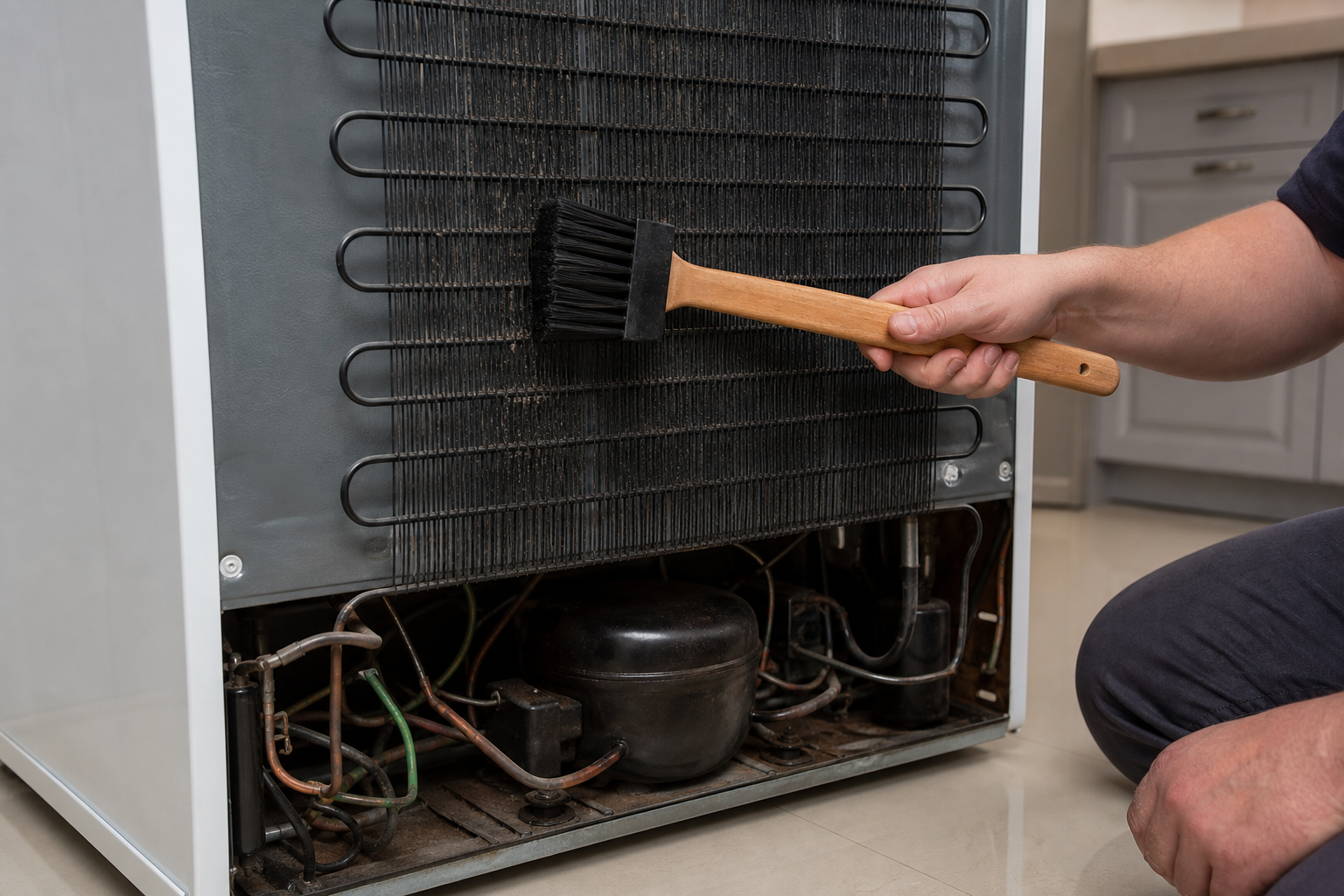
Clean Condenser Areas Only When the Model Requires It
Some refrigerators have accessible condenser coils underneath or behind the cabinet. Others use concealed systems that are not intended for homeowner cleaning.
Before cleaning
Check the owner’s manual. Disconnect power when instructed, avoid bending refrigerant tubing and do not remove sealed panels. Use a soft brush or suitable vacuum attachment only on areas identified as owner-accessible.
Heavy dust around an accessible condenser reduces heat transfer. Cleaning it correctly can help the refrigeration system release heat with less strain.
A Fridge-Care Routine That Is Easy to Follow
Every week
- Remove food blocking internal vents.
- Check that doors close without resistance.
- Wipe spills before they reach the gasket.
Every month
- Confirm temperatures with a separate thermometer.
- Inspect the gasket for gaps or damage.
- Check for recurring frost or condensation.
Seasonally
- Inspect accessible ventilation space around the cabinet.
- Clean owner-accessible condenser areas when required.
- Listen for changes in fan or compressor sound.
Normal Long Run Times Versus a Real Problem
A refrigerator may run longer than usual after:
- A large grocery load
- A lengthy door opening
- A power outage
- Hot weather
- A recent temperature adjustment
Continuous operation becomes more concerning when it continues under normal conditions or appears with poor cooling, frost, overheating, leaks or abnormal noise.
A new scraping, repeated clicking or unusually loud buzzing sound should not be dismissed. The noisy fridge guide explains which operating sounds may need attention.
Common Fridge-Efficiency Myths
“The coldest setting is always best.”
A lower setting can increase run time and freeze food without improving normal storage.
“A completely full fridge is more efficient.”
Some stored mass helps temperature stability, but overpacking blocks cold-air circulation.
“All refrigerators have coils that homeowners should clean.”
Condenser placement varies. Some systems are concealed and should not be opened or cleaned by the homeowner.
When Maintenance Is No Longer Enough
Arrange refrigerator service when:
- The refrigerator remains too warm after basic airflow checks.
- The compressor or fans rarely stop under normal conditions.
- A door will not align or seal properly.
- Thick frost repeatedly returns.
- The cabinet becomes unusually hot.
- A fan grinds or scrapes.
- The refrigerator repeatedly clicks without cooling.
- An error code keeps returning.
Alpha Tech provides refrigerator repair in Toronto when routine maintenance does not correct the problem.
Questions Homeowners Commonly Ask
Is it normal for a refrigerator to run for a long time?
It can be normal after groceries are added, during hot weather or after the doors remain open. It is less normal when the appliance runs continuously under ordinary conditions or cannot maintain temperature.
Does overfilling a fridge make it work harder?
Yes. Tightly packed food can block internal vents and prevent cold air from reaching parts of the compartment.
How do I know whether the door seal is leaking?
Look for visible gaps, condensation, frost near the door, torn gasket material or a door that does not close evenly.
Should every refrigerator have its coils cleaned?
No. Some refrigerators have accessible coils, while others use concealed condenser systems. Follow the maintenance instructions for the exact model.
Can a clogged condenser cause constant running?
Heavy dust on an owner-accessible condenser can reduce heat transfer and contribute to longer run times. Constant operation can also result from a door leak, fan, sensor, defrost or sealed-system fault.
When should I call for refrigerator repair?
Book service when temperatures remain unsafe, the fridge runs almost constantly, frost returns, the cabinet overheats or new fan and compressor noises appear.
Fridge Still Running Constantly?
When correct temperatures, clear vents, clean seals and proper loading do not reduce the run time, the appliance may need testing for a fan, sensor, defrost or refrigeration-system problem.