
A glass stove top gives your kitchen a smooth, easy-to-clean cooking surface, but it still needs careful handling. Heavy impacts, sudden temperature changes, rough cookware and hardened spills can damage the glass-ceramic surface over time.
Most cooktop cracks are preventable. The safest habits are to lift cookware instead of sliding it, keep heavy objects away from the stove, use clean and flat-bottomed pans, avoid sudden temperature changes and clean sugary spills correctly.
How can you protect stove top glass from cracks?
Protect a glass stove top by preventing impacts, lifting pots instead of sliding them, using cookware with flat and smooth bottoms, keeping the surface clean and dry, avoiding cold water on hot glass, removing sugary spills as directed by the manufacturer and never using the cooktop as a work surface. Do not store heavy jars, cans or cookware above it where they could fall.
Is the glass already cracked?
Stop using the cooktop if you can see or feel a crack. Liquids can enter the appliance through damaged glass and reach energized electrical components. A crack may also spread when the surface heats and cools.
Turn the appliance off and disconnect it at the breaker when it is safe to do so. Do not cover the crack with glue, epoxy, tape or a cooktop mat, and do not continue using burners that appear unaffected.
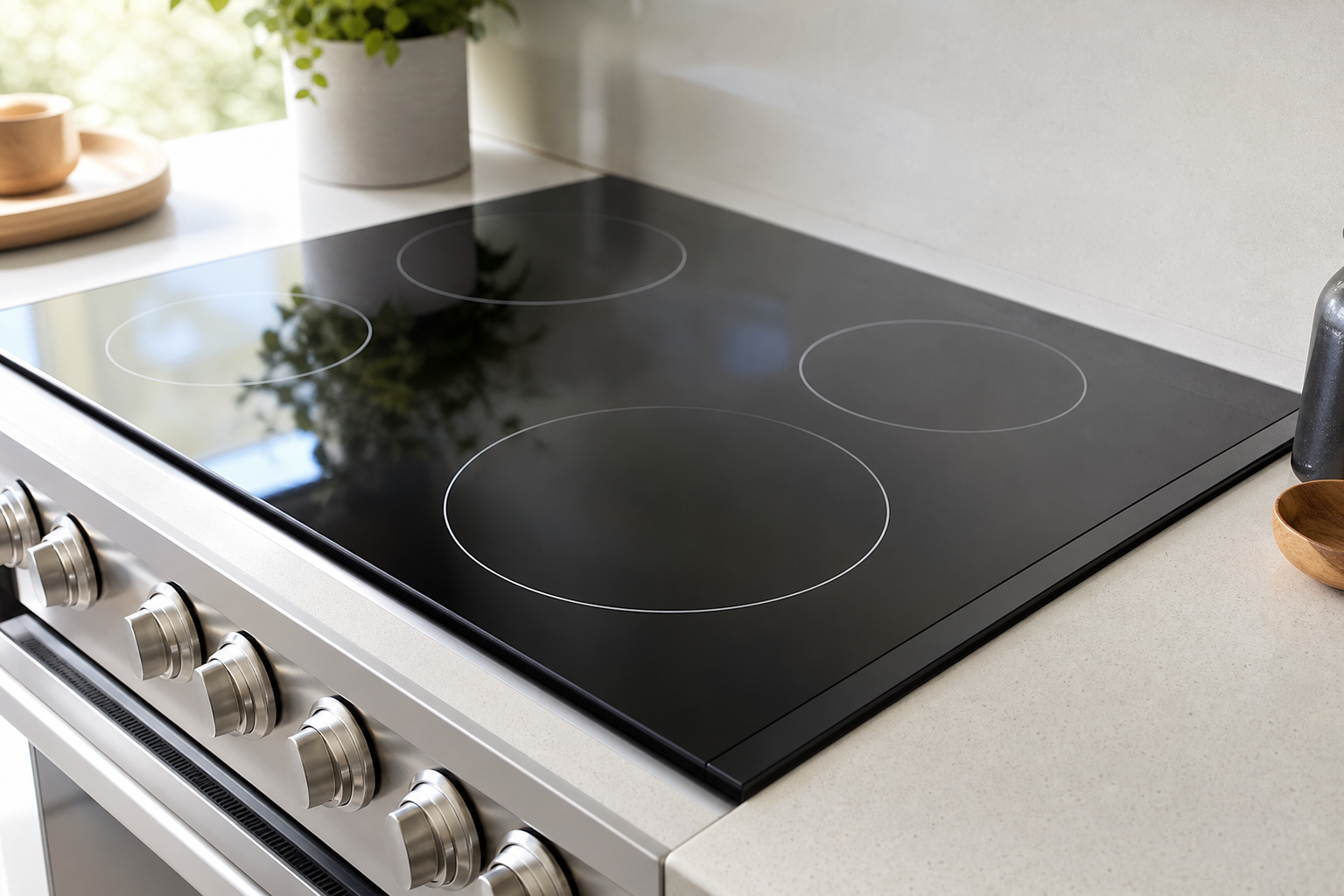
Why Glass Cooktops Crack
A smooth stove top is normally made from glass-ceramic rather than ordinary window glass. It is designed to tolerate normal cooking temperatures, but it is not unbreakable.
Damage commonly develops from:
- A heavy or hard object striking the surface
- A pan being dropped instead of placed down gently
- Sudden temperature changes known as thermal shock
- Rough or warped cookware scraping across the glass
- Sugary food bonding to the hot surface and causing pitting
- An appliance that is improperly supported or installed
- A small chip or existing crack spreading during heating
In some cases, damage appears suddenly even though the surface was weakened earlier. A dropped spice jar, repeated cookware impact or small edge chip may not create a visible crack until the cooktop is heated again.
1. Keep Heavy Objects Away From the Cooktop
Impact is one of the most direct causes of cooktop cracking. A glass jar, cast-iron pan, canned food item or small appliance can damage the surface when dropped from even a short height.
Avoid storing heavy cookware, jars, cans and kitchen appliances in cabinets directly above the stove. Items can slip from your hands while you are reaching over the glass.
Safer kitchen setup
Store heavy items in lower cabinets. Keep frequently used spices and cooking tools beside the stove rather than above it whenever possible.
2. Lift Pots and Pans Instead of Sliding Them
Sliding cookware can scratch the surface, especially when salt, sugar, sand or food particles are trapped underneath. Deep scratches and chips can create weak points where a crack may begin.
Lift each pan completely before moving it to another cooking zone. Place it down gently instead of dropping or rocking it into position.
Be especially careful with cast iron, stoneware and other heavy cookware. These materials are not automatically unsuitable for every glass cooktop, but their weight and rough surfaces can cause damage when handled carelessly. Follow the appliance manufacturer’s cookware guidance.
3. Use Flat, Smooth and Clean Cookware
Cookware should sit evenly on the cooking zone. Warped, dented, ridged or unstable pans may heat unevenly and concentrate pressure on smaller areas of the glass.
Before placing cookware on the stove:
- Check that the bottom is flat.
- Remove dried food, grease and grit.
- Make sure the base is dry.
- Avoid pans with sharp burrs or damaged edges.
- Use cookware sizes recommended for the cooking zone.
Water or residue under a pan may leave deposits on the surface when heated. A dirty base can also scratch the glass as the pan is moved.
4. Prevent Sudden Temperature Changes
Thermal shock happens when one area of the glass changes temperature much faster than the surrounding surface. The resulting stress can cause a weakened cooktop to crack.
Avoid placing the following on a hot cooking surface:
- A frozen pan or food container
- A cold, wet sponge or cloth
- Cookware taken directly from a cold garage or balcony
- Cold water poured onto a hot cooking zone
- A chilled lid or utensil placed on heated glass
Allow the surface and cookware to change temperature gradually. Do not try to cool the stove quickly after cooking.
5. Clean Sugary Spills Before They Harden
Melted sugar, syrup, jam, candy and other sugary foods can bond strongly to hot ceramic glass. If the residue hardens, it may pull material from the surface as it is removed and leave permanent pits or chips.
Turn off the cooking zone and follow the cleaning procedure in the owner’s manual. Some manufacturers recommend carefully removing sugary spills while the surface is still warm using oven mitts and an approved cooktop scraper.
Follow your model’s instructions
Do not use an ordinary knife, screwdriver or metal utensil. An approved cooktop scraper must be held at the angle specified by the manufacturer to avoid scratching the glass.
6. Use Products Made for Glass-Ceramic Cooktops
Abrasive powder, steel wool, rough scouring pads, oven cleaner and harsh chemicals can scratch, stain or damage a glass cooktop.
Wait until the surface is at the temperature specified by the manufacturer, then use a soft cloth and an approved ceramic-cooktop cleaner. Remove loose crumbs first so they are not dragged across the glass.
Clean small spills regularly instead of allowing layers of burned residue to build up. Heavy scrubbing later creates a greater risk of scratching the surface.
7. Do Not Overheat Empty Cookware
An empty pan can become extremely hot in a short time, particularly on an induction cooktop. Excessive localized heat can damage cookware and place unnecessary thermal stress on the cooking surface.
Begin with the heat level recommended for the food and cookware. Do not leave an empty pan unattended, and do not continue heating a pot after its contents have boiled dry.
Replace cookware with a severely warped base because poor contact can create uneven heating and unstable movement.
8. Do Not Use the Stove Top as a Counter or Cutting Board
The smooth surface may look like extra counter space, but it should not be used for food preparation, storage or cutting.
Keep these items off the cooktop:
- Cutting boards and knives
- Small appliances
- Grocery bags and canned food
- Plastic containers and aluminum foil
- Hot baking trays and roasting pans
- Heavy decorative covers
Plastic and foil can melt onto a hot surface. A sharp knife, dropped appliance or heavy object can chip or crack the glass.
9. Do Not Leave a Hot Lid Flat on the Glass
A hot lid placed flat on the cooktop can form a seal as the surfaces cool. Air may become trapped between the lid and glass, creating suction that can stress or damage the surface when the lid is lifted.
Place hot lids on a suitable heat-resistant surface away from the cooktop. Do not force a lid upward if it appears stuck to the glass.
Wait for the surfaces to cool and follow the appliance manufacturer’s instructions if a lid becomes sealed to the cooktop.
10. Make Sure the Cooktop Is Installed Correctly
A built-in cooktop needs the correct opening, support, clearances and mounting method. If the countertop opening is too tight or the appliance is twisted, pressure can be transferred to the glass.
Damage can also occur when mounting brackets are overtightened or when cabinetry shifts beneath the appliance. A cooktop should sit evenly without rocking, bending or being forced into the opening.
Arrange an inspection if the cooktop was recently installed, the countertop was replaced, or a crack appeared near an edge or mounting point without a known impact.
Should You Use a Glass Cooktop Protector Mat?
Do not place a mat, liner, silicone sheet or protective cover on an active cooking zone unless the cooktop manufacturer specifically approves it for your model.
An unsuitable cover may trap heat, melt, affect pan detection or interfere with safe operation. This is especially important for induction and radiant-electric cooktops.
A removable cover may be used only when the cooktop is completely off and cool, provided the manufacturer allows it. Remove the cover before cooking and confirm that no grit is trapped underneath.
Is It a Scratch, Stain, Chip or Crack?
Surface stain or residue
A stain usually sits on top of the glass and may change after approved cleaning. Burned deposits can resemble scratches until the surface is cleaned.
Scratch
A scratch is a surface line caused by cookware, grit or cleaning tools. It may be visible without extending through the glass. Deep scratches should still be assessed because they can weaken the surface.
Chip or pit
A chip removes a small section of material, often near an edge or impact point. Pitting can also develop when hardened sugary residue pulls at the surface.
Crack
A crack may be a straight, curved or branching line that extends through the glass. You may be able to feel it with a fingernail. Stop using the appliance when a crack is suspected.
What to Do if Your Glass Stove Top Cracks
- Stop using all cooking zones.
- Turn the appliance off and disconnect power at the breaker when safe.
- Allow the cooktop to cool without adding water or ice.
- Keep liquids and cleaning products away from the damaged area.
- Record the model and serial number.
- Photograph the crack and note whether an impact or spill occurred.
- Arrange professional inspection and replacement of the damaged glass assembly.
Cooktop glass is generally replaced rather than sealed or patched. The correct replacement must match the appliance model, burner layout, controls and mounting system.
When to Call a Cooktop Repair Technician
Book professional service when the surface has structural damage or when heating and control problems appear with the visible damage.
- A crack is visible or can be felt.
- A chip has formed near a cooking zone or edge.
- A deep scratch appears to be spreading.
- Liquid entered through damaged glass.
- A burner heats unevenly or will not turn off.
- An error code appears repeatedly.
- The glass lifts, shifts or does not sit evenly.
- The cooktop was recently installed or the countertop changed.
- You smell burning or see sparks beneath the surface.
Alpha Tech provides cooktop repair in Toronto and the GTA. A technician can inspect the glass, mounting system, heating elements, wiring and controls before recommending the correct repair.
What a Technician Checks During the Service Visit
The technician will examine the location and pattern of the damage and ask whether the crack followed an impact, spill, overheating event, installation change or sudden temperature change.
The inspection may include:
- The depth and direction of the crack
- Chips, pitting and impact marks
- Cooktop support and mounting pressure
- Heating-element condition
- Temperature sensors and limit controls
- Wiring beneath the damaged surface
- Control operation and error history
- Availability of the model-specific glass assembly
This helps determine whether only the glass assembly requires replacement or whether the impact, overheating or liquid exposure affected additional components.
Check the Care Instructions for Your Cooktop
Cookware restrictions, cleaning products, scraper methods and protector recommendations differ between models. Use your model number when reviewing the owner’s manual.
Frequently Asked Questions
What is most likely to crack a glass stove top?
Heavy impact is one of the most common causes. Sudden temperature changes, improper installation, deep scratches, chips and extreme localized heat can also weaken or crack the glass.
Can cast-iron cookware crack a glass stove top?
Cast iron can damage the surface if it is dropped, slid or has a rough bottom. Check whether your manufacturer permits it, use a flat and clean pan and lift it carefully whenever it must be moved.
Can cold water crack a hot glass cooktop?
A sudden temperature change can place stress on hot glass, particularly when the surface is already chipped or weakened. Allow the cooktop to cool naturally instead of pouring cold water onto it.
Can a scratched glass stove top still be used?
A light surface scratch may be cosmetic, but deep scratches, chips and lines that can be felt should be assessed. Stop using the appliance if you are unsure whether the mark is a crack.
Is it safe to use one burner when another part of the glass is cracked?
No. A crack can spread, and liquid may reach electrical components below the surface. Stop using the entire cooktop and disconnect power until it is professionally inspected.
Can cracked cooktop glass be repaired with glue or epoxy?
No. Adhesive does not restore the glass’s strength, heat resistance or electrical protection. A cracked glass assembly normally requires model-specific replacement.
Is Your Glass Cooktop Cracked or Damaged?
Stop using the appliance if the surface has a crack, deep chip or spreading line. A technician can confirm whether the glass assembly and the components underneath remain safe.
Alpha Tech Appliance provides cooktop diagnosis and repair for homeowners across Toronto and the GTA.