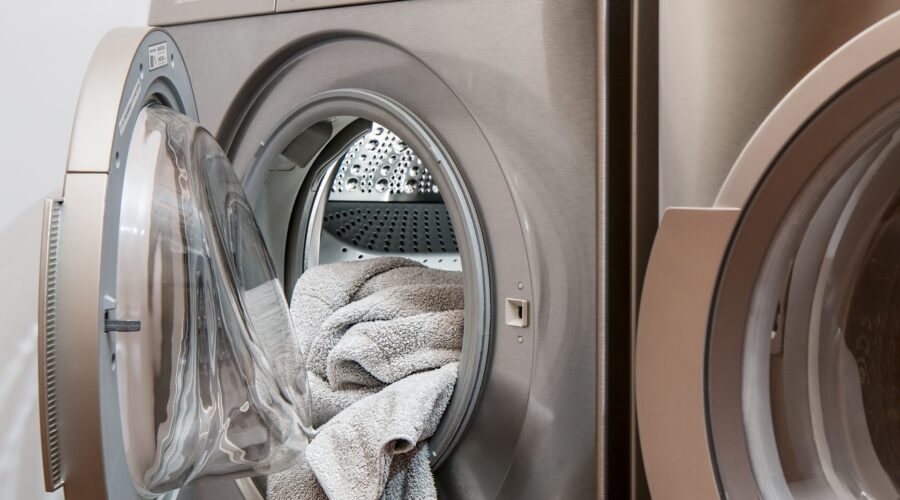
A washing machine can look clean while detergent, fabric softener, lint and moisture collect inside the drum, dispenser, door seal and drainage system. Over time, that residue can cause musty smells and leave freshly washed clothing smelling less clean.
Proper washing machine cleaning involves more than running one empty cycle. The drum, detergent dispenser, front-load gasket and accessible drain filter each require separate attention. The correct products and procedures also vary by manufacturer, so always compare these steps with the manual for your model.
Never mix washing machine cleaners
Do not combine bleach with vinegar, ammonia or another household cleaner. Mixing products can create dangerous gases and may damage washer components.
Use one manufacturer-approved cleaning method at a time, follow its label and complete any required rinse before using a different product.
The Five Areas That Need Cleaning
1. Drum or wash tub: Holds detergent film, mineral residue and material released from clothing.
2. Detergent dispenser: Collects thickened detergent and fabric softener around the tray and internal channels.
3. Door gasket or lid area: Traps moisture, lint, hair and small objects.
4. Drain-pump filter: May collect coins, lint, buttons and other debris on models with an owner-accessible filter.
5. Exterior and connections: Include the controls, cabinet, water-supply hoses and space around the washer.
Before You Start
- Remove all clothing and objects from the drum.
- Check the model manual for its cleaning cycle and approved products.
- Turn the washer off before manually cleaning the dispenser, gasket or filter.
- Wear gloves when using a washer cleaner or other approved chemical product.
- Keep the room ventilated.
- Prepare towels and a shallow container before opening a drain filter.
- Never force a dispenser, filter cover or access panel that does not release normally.
Some washers automatically lock the door or retain water after a cycle. Do not attempt to open the filter or door until the machine is off, the water has cooled and the manual’s draining procedure has been followed.
Front-Load Washing Machine Cleaning Routine
Empty and inspect the drum
Check inside the drum for coins, hair clips, tissues and other objects. Look through the drum perforations and around the lifters for visible residue, but do not insert tools into the openings.
Clean the rubber door gasket
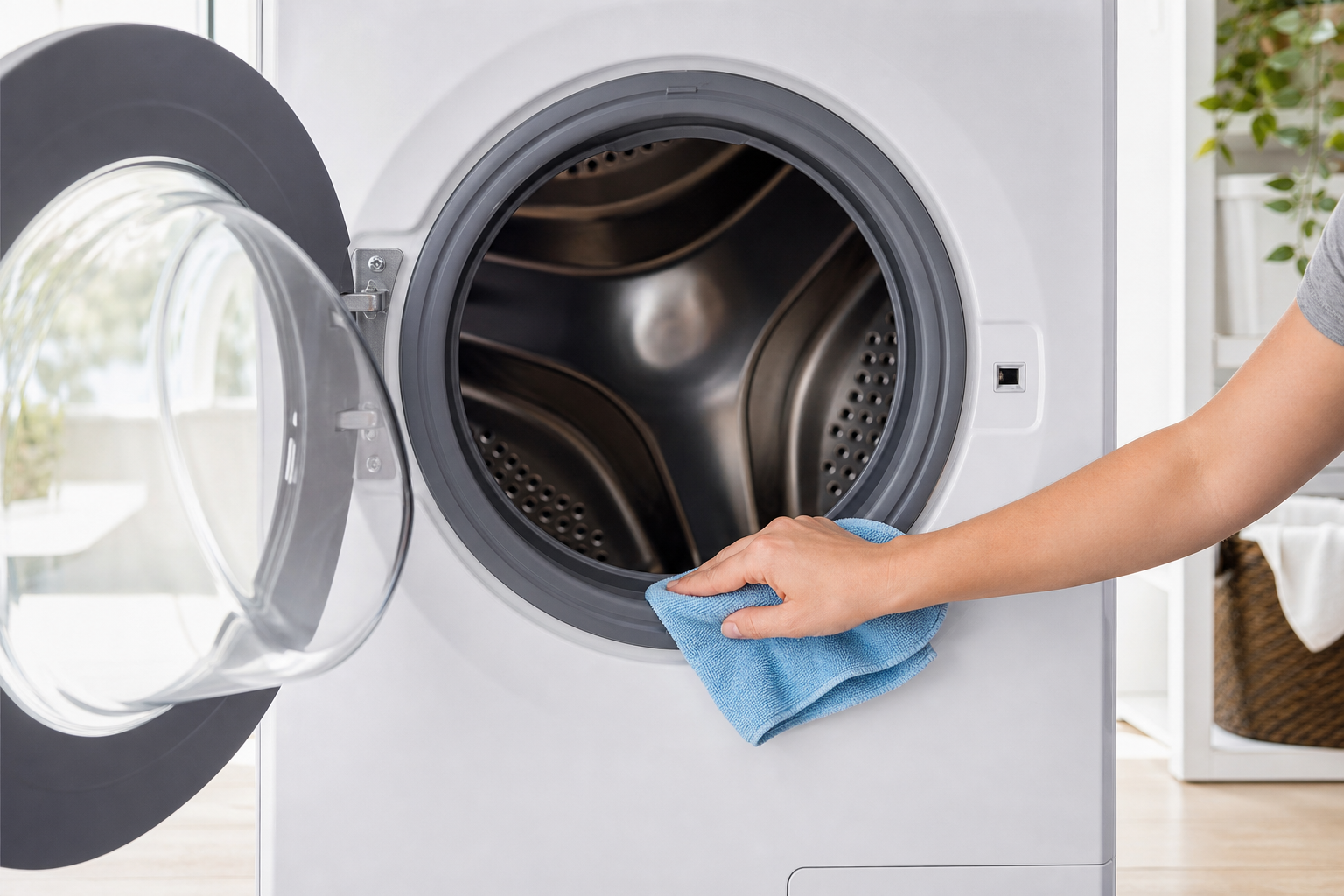
Gently pull back the accessible folds of the gasket. Remove lint, hair, coins and other loose objects by hand. Wipe the surface using a soft cloth and the cleaning method approved for the model.
Pay particular attention to the bottom of the gasket, where water commonly remains. Do not use a sharp object or abrasive pad because a torn gasket can cause a leak.
Wash the detergent dispenser
Remove the drawer only when the model is designed for owner removal. Wash detachable inserts with warm water and a soft brush. Wipe the drawer opening without pushing debris deeper into the dispenser channels.
Allow the components to dry and reinstall them in their correct positions. A misplaced insert can prevent detergent or softener from dispensing properly.
Run the washer-cleaning cycle
Select the cycle labelled Clean Washer, Self Clean, Tub Clean, Drum Clean or the equivalent provided by the manufacturer. Use the approved amount and type of washer cleaner specified for that cycle.
Do not add clothing. Do not add regular laundry detergent unless the manual specifically directs you to use it during the cleaning cycle.
Dry the washer afterward
Wipe the drum, gasket and inner door after the cycle finishes. Leave the door and dispenser open only as far as is safe in your household so remaining moisture can evaporate.
Top-Load Washing Machine Cleaning Routine
Inspect the tub and wash plate
Remove loose objects and wipe visible residue from the upper tub ring, wash plate or accessible agitator surfaces. Do not attempt to remove the agitator or wash plate unless the manual identifies it as an owner-maintenance step.
Clean the dispensers
Clean accessible bleach, detergent and fabric-softener dispensers according to the manual. Detachable cups may need to be rinsed separately, while fixed dispensers should be wiped without flooding their openings.
Wipe beneath the lid
Wipe the underside of the lid, hinges and upper tub rim using a damp cloth. These areas can collect detergent splashes and lint even though they do not remain submerged during a normal wash.
Run the approved tub-cleaning cycle
Use the washer’s dedicated cleaning cycle when available. On models without one, follow the exact empty-cycle instructions in the manual rather than choosing a temperature or chemical mixture from a general online recipe.
Let the tub dry
Wipe the upper tub area and leave the lid open temporarily, provided that doing so does not create a safety concern for children or pets.
How to Clean an Accessible Drain-Pump Filter
Not every washing machine has a filter intended for homeowner access. On some front-load models, it is located behind a small lower access door. Other models require disassembly and should be serviced by a technician.
- Turn off the washer and follow the manual’s filter-cleaning procedure.
- Place towels and a shallow container beneath the access area.
- Drain residual water using the emergency hose when the model provides one.
- Open the filter slowly because additional water may escape.
- Remove lint, coins, hair and other visible debris.
- Check that the filter seal is clean and undamaged.
- Reinstall the filter securely in the position specified by the manufacturer.
Stop when the filter is stuck, the access area is leaking or the instructions require removal of a washer panel. Forcing the filter can damage its housing or seal.
What Should You Put in the Cleaning Cycle?
There is no single cleaning recipe suitable for every washing machine. Manufacturers may recommend a packaged washer cleaner, a measured amount of chlorine bleach, another approved product or no added cleaner at all.
Before adding anything, check:
- The cleaning-cycle instructions in the manual
- Which dispenser compartment should be used
- Whether the product is suitable for high-efficiency machines
- The maximum permitted quantity
- Whether an additional rinse is required afterward
Never assume that vinegar, baking soda, bleach or another household product is safe merely because it is commonly recommended online. Rubber components, finishes and cleaning programs differ between brands and models.
A Practical Washer-Care Schedule
After each load
Remove wet laundry promptly, check the drum for small objects and allow the interior to dry when it is safe to leave the door or lid open.
Regularly
Wipe the front-load gasket, door glass, lid area and dispenser surfaces. Increase the frequency when residue or moisture is visible.
At the manufacturer’s recommended interval
Run the dedicated washer-cleaning cycle. Some manufacturers recommend doing this monthly, while other schedules depend on cycle count or an automatic reminder.
Periodically
Inspect accessible water hoses, the drain hose, connections and the area beneath the washer for moisture, swelling or corrosion.
Habits That Help Prevent Washer Odours
- Use the detergent type specified for the washer.
- Measure detergent based on the product directions, load and water conditions.
- Do not fill detergent or softener above the marked maximum line.
- Remove wet laundry shortly after the cycle ends.
- Wipe water from the front-load gasket.
- Allow the drum and dispenser to dry between loads when safe.
- Check pockets for paper, coins and small objects.
- Avoid repeatedly overloading the drum.
- Run the washer-cleaning cycle when the machine displays a reminder.
Why Does the Smell Keep Coming Back?
A returning smell does not always mean the drum needs another cleaning cycle. The source may be elsewhere in the washer or drainage system.
- Excess detergent: Soap residue can remain when more product is used than the load requires.
- Dirty dispenser channels: Cleaning the removable tray may not remove residue farther inside the dispenser housing.
- Standing water: A pump, filter or drain-hose problem can leave water behind after the cycle.
- Damaged gasket: Material can collect inside a torn or deteriorated door seal.
- Drain odour: A plumbing or drain-hose installation problem may allow odour to enter around the washer.
- Hidden object: A small piece of clothing or debris may be trapped between components.
When Washing Machine Cleaning Is Not Enough
Arrange diagnosis when the washer has any of these symptoms:
- Standing water remains after the cycle.
- The washer drains slowly or displays a drain error.
- Water leaks from the door, dispenser, filter or underneath the machine.
- The gasket is torn, loose or heavily deteriorated.
- The filter cannot be removed or sealed correctly.
- A grinding, scraping or pump noise has appeared.
- A burning smell or electrical problem is present.
- Odour returns immediately after the washer has been cleaned and dried.
Alpha Tech provides washing machine repair across Toronto and the GTA for drainage, gasket, pump, leak and cycle problems that routine cleaning does not resolve.
Manufacturer and safety references
Samsung Canada: How to Clean a Samsung Washer
Washing Machine Cleaning Questions
How often should I clean my washing machine?
Follow the schedule in the washer manual or its automatic cleaning reminder. Some manufacturers recommend running the cleaning cycle monthly, especially when the washer is used frequently or residue appears.
Can I mix vinegar and bleach to clean a washer?
No. Bleach must never be mixed with vinegar, ammonia or another cleaning product because the combination can release dangerous gases.
Why does my front-load washing machine smell?
Moisture and residue can collect in the door gasket, dispenser, drum and drainage system. Excess detergent, wet laundry left inside and standing water can make the smell return.
Does every washing machine have a drain filter I can clean?
No. Some models provide an owner-accessible drain-pump filter, while others require cabinet disassembly. Check the manual before opening an access cover or attempting to remove a filter.
When does a smelly washer need repair?
Arrange diagnosis when the smell returns immediately, water remains after a cycle, the washer drains slowly, a leak is present or the gasket, filter, pump or drainage system appears damaged.
Washer Smell Returning After Cleaning?
Standing water, restricted drainage, a damaged gasket or debris inside the pump system may require more than another cleaning cycle.